How a washer-extractor works
The parts, the physics of extraction, and what they mean for drying, water, energy, hygiene, and service. Every number on this page comes with its formula or its source.
Seven parts that do the work.
A section through a soft-mount washer-extractor. Point at a label, or at a description below, to find the part.
01Controls
The programmable controller runs each formula step: fill level, temperature, time, drum action, extraction speed, and dosing signals. An emergency stop sits beside it.
02Door and gasket
A heavy door with a glass porthole seals against a gasket. An interlock keeps the machine from starting with the door open and keeps the door locked during the cycle.
03Drain valve
At the bottom of the shell. It closes to hold the bath and opens to drain wash and rinse water and to release water during extraction. Checking that it opens and seals is routine maintenance.
04Suspension
On a soft-mount machine, springs and shock absorbers carry the shell and drum. An out-of-balance switch slows or stops the extract when a load runs too far off balance.
05Shell (outer tub)
The stationary tank, usually stainless steel, that holds the water. It carries the door opening at the front and the bearing housing at the back.
06Drum (basket)
The perforated cylinder that holds the goods. Lifters carry the load up during washing, and the perforations let water leave the goods during extraction.
07Motor and drive
The motor turns the drum shaft, which runs in bearings at the back of the shell, by belt or directly. On many machines a variable-frequency drive sets the speed and the reversing.
--About the drawing
A simplified, general arrangement for explanation. It is not a drawing of a specific FreshLine model, and proportions are not to scale.
G-force calculator
G-force at the drum wall depends on two numbers: drum diameter and speed. Double the speed and the force goes up four times.
Relative centrifugal force at the drum wall
273G
G = 0.0000142 × 30 × 800²
- Speed for 1 G at this diameter
- 48rpm
- Speed for 100 G at this diameter
- 485rpm
Washing happens below 1 G, so the load lifts and falls. Extraction happens at hundreds of G.
Reading the result
Below 1 G, gravity wins at the top of the drum, so the goods lift and fall through the water. That is the wash action, and why wash speeds are slow.
Just above 1 G, the goods stay pinned to the drum wall. Published machine specifications put the distribution step at about 2 to 2.5 G, which spreads the load evenly before the drum accelerates.
Hundreds of G is extraction. Most hard-mount machines extract at about 100 to 200 G, and some reach 300 G or more. Soft-mount machines typically reach about 300 to 450 G.
Turnout gear is the common exception: firefighter gear is extracted at no more than 100 G, the limit set under NFPA 1851 and carried into published summaries of NFPA 1850.
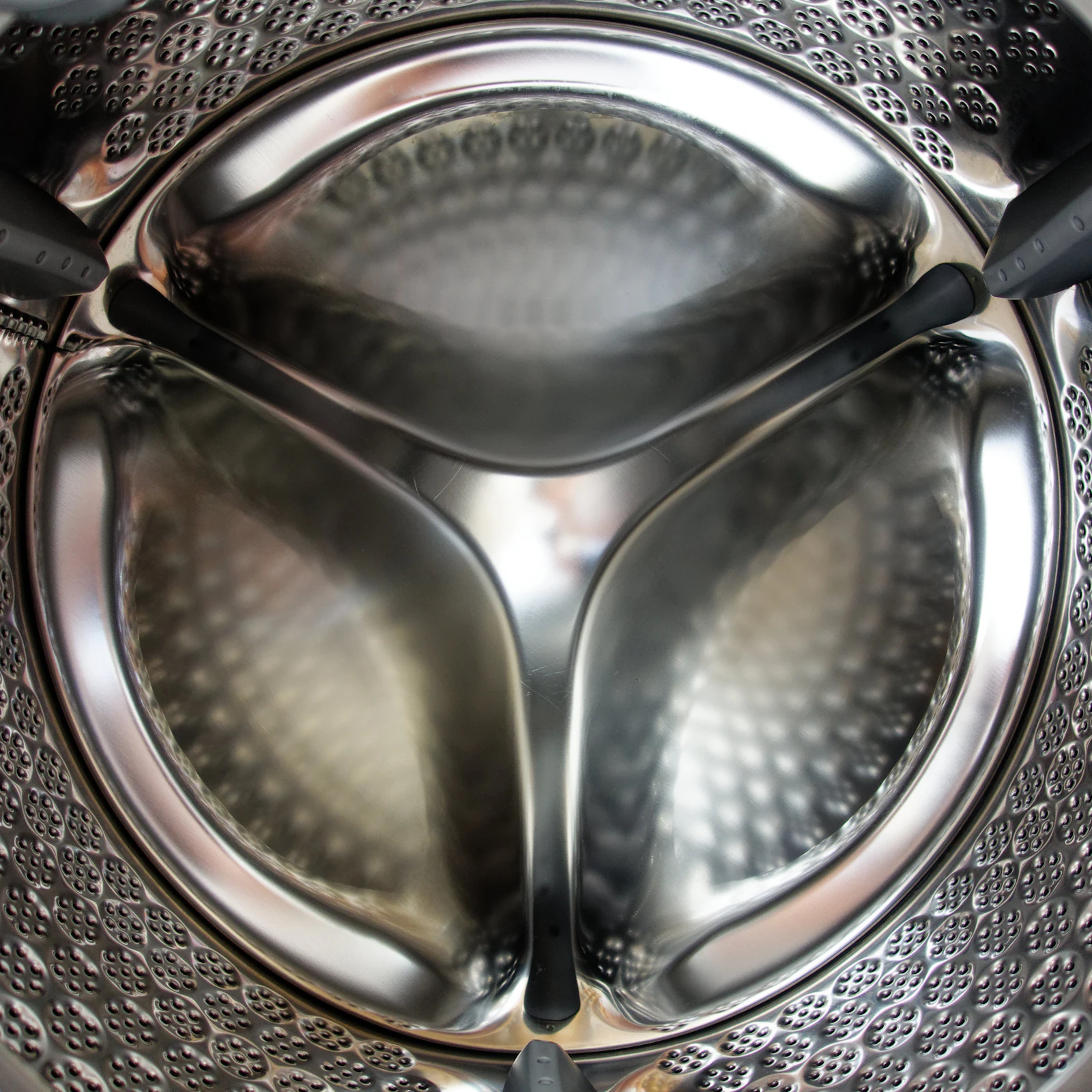
Water the washer leaves is work for the dryer.
Remaining moisture is the water still in the goods after extraction, expressed as a percentage of their dry weight. Every pound of it has to be evaporated in the dryer.
Evaporating a pound of water takes about 970 Btu at 212°F, and a little more at the lower temperatures inside a dryer, so roughly 1,000 Btu per pound is a common rule of thumb. That is before the dryer's own losses.
Published manufacturer test data show remaining moisture falling as G-force rises, with smaller gains above about 300 G. Real numbers depend on the goods, the extract time, and how moisture is measured.
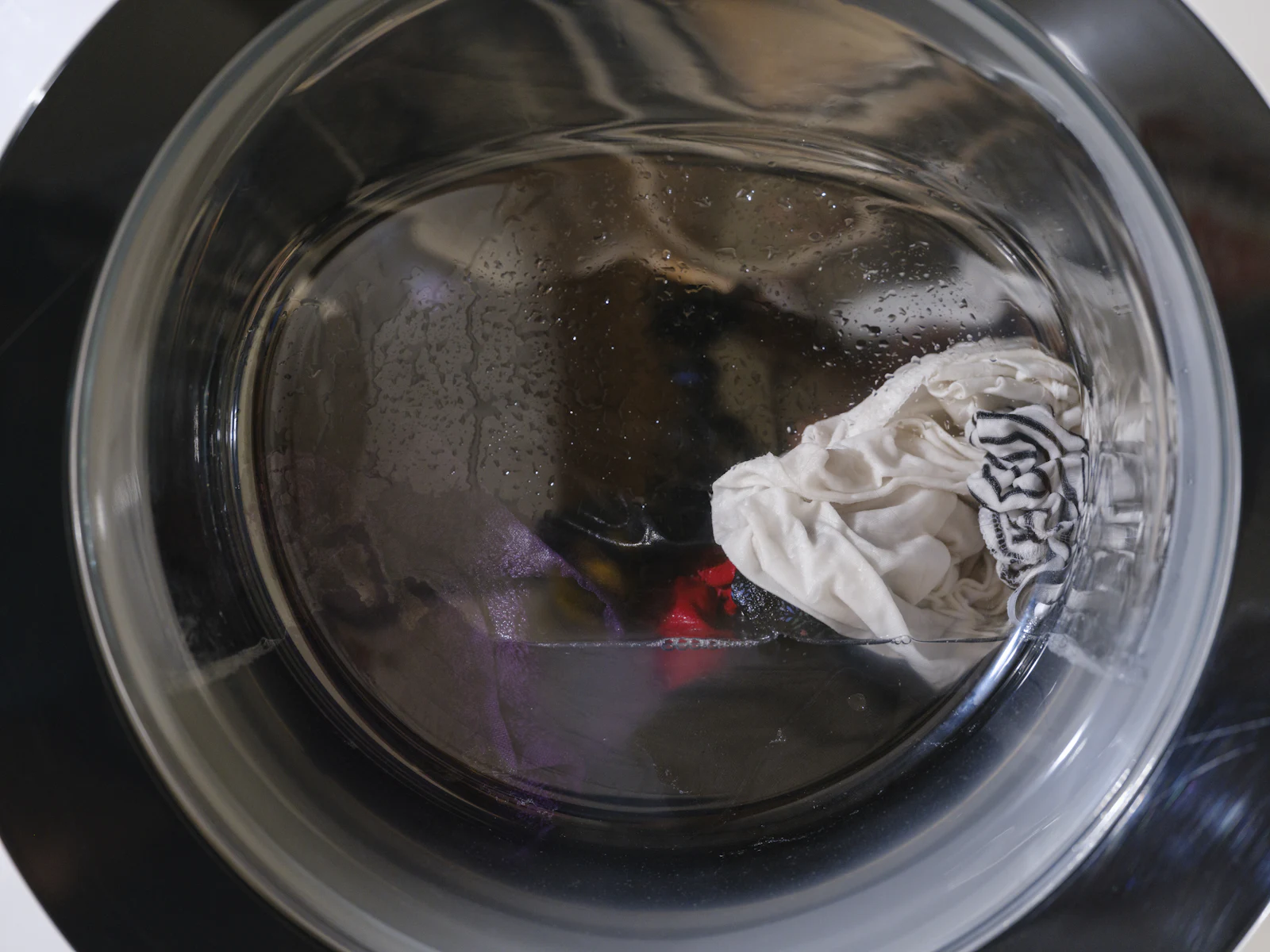
Gallons and degrees.
A gallon of water weighs about 8.34 lb, and raising a pound of water 1°F takes 1 Btu. Heating 100 gallons from 60°F to 160°F takes about 83,400 Btu before losses.
Water level per step
A low bath gives the goods room to fall and makes the most of the chemistry. Rinses use more water to carry soil away. Programmable levels let each step use what it needs.
Temperature by formula
Hot water where the goods or a disinfection step require it, and cooler baths where the chemistry works without it. Every degree saved is multiplied by every gallon heated.
Full loads by dry weight
Capacity is rated by the dry weight of goods. Running near the rated load uses water and energy per pound most efficiently; overloading hurts the wash.
Rinses that match the chemistry
The number of rinses depends on the detergent and the soil. Working with the chemical supplier keeps rinses from being added out of habit.
Extraction
The biggest energy lever is often in the dryer. A harder, well-balanced extract sends less water, and so less work, down the line.
Reuse where allowed
Some laundries capture lightly soiled rinse water for the next load's first bath. Whether that fits depends on the goods, the chemistry, and local codes.

Time at temperature.
For healthcare laundries, CDC guidelines note that hot-water washing is commonly done at 160°F (71°C) or higher for at least 25 minutes.
The same guidelines recognize low-temperature cycles of about 71 to 77°F (22 to 25°C) when the washer cycle, the detergent, and the laundry additives are carefully monitored and controlled, using chemicals suited to low-temperature washing at the proper concentration.
Either way, the washer's job is the same: reach the setting, hold it for the full time, and run the formula the same way every load.
- Hot water
- 160°F (71°C) or higher, for 25 minutes or more
- Low temperature
- About 71 to 77°F (22 to 25°C) with suitable chemistry at proper concentration
- Source
- CDC, Guidelines for Environmental Infection Control in Health-Care Facilities, laundry and bedding
General information, not infection-control advice. Follow your facility's infection-prevention program, your accrediting body, and your chemical supplier.
Designed to be opened.
Washer-extractors run for years, and the parts that wear decide how much of that time is uptime. We design so that the wear parts can be reached and replaced in place, and so that a technician can see what is wrong before taking anything apart.
- Door gasket
- Cleaned daily, inspected for cuts and hardening, replaced when it stops sealing
- Belts
- Checked monthly for wear and tension on belt-driven machines
- Bearings and seals
- Lubricated where the manual calls for it; a leak at the back of the shell is a warning
- Valves and hoses
- Inlet screens cleaned, hoses checked for leaks, drain valve operation verified
- Suspension
- Shock absorbers and the out-of-balance switch checked on soft-mount machines
- Safety
- Door interlock tested daily; power locked out before any panel comes off
Ask an engineering question.
Extraction, foundations, utilities, or formulas. Send the details and we will answer by email.
contact@freshlinewashers.com