FreshLine home 08Contact
§ 02Sheet 02 / EquipmentCategory level

Equipment families

Four categories of washer-extractor equipment, described by what they are, where they fit, how they install, and what you decide when you configure one.

  1. EQ-01Soft-mount washer-extractors
  2. EQ-02Hard-mount washer-extractors
  3. EQ-03Barrier (pass-through) washers
  4. EQ-04Controls and chemical dosing
  5. EQ-05Comparison table
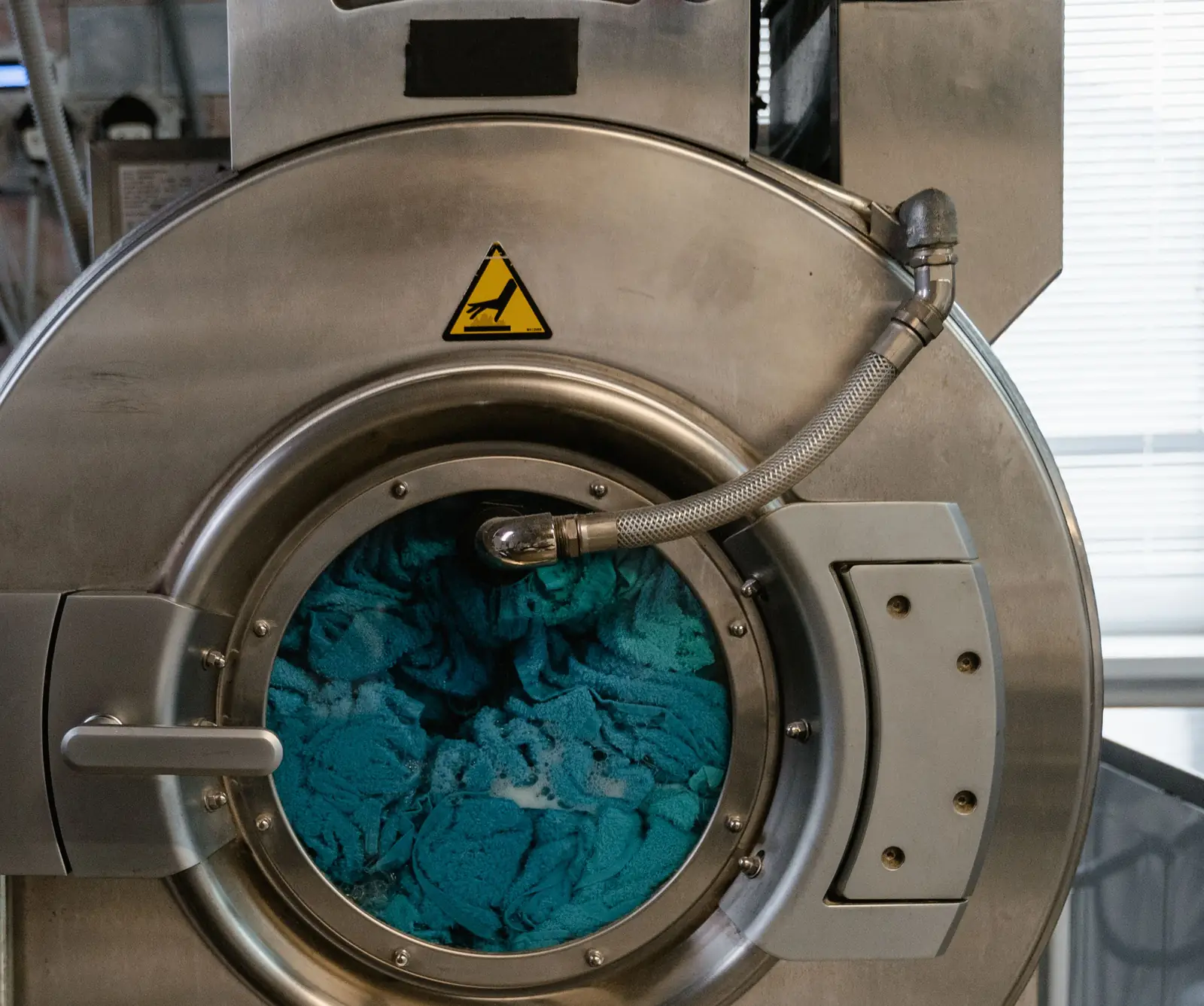
Door of a washer-extractor with a load of teal towels behind the glass
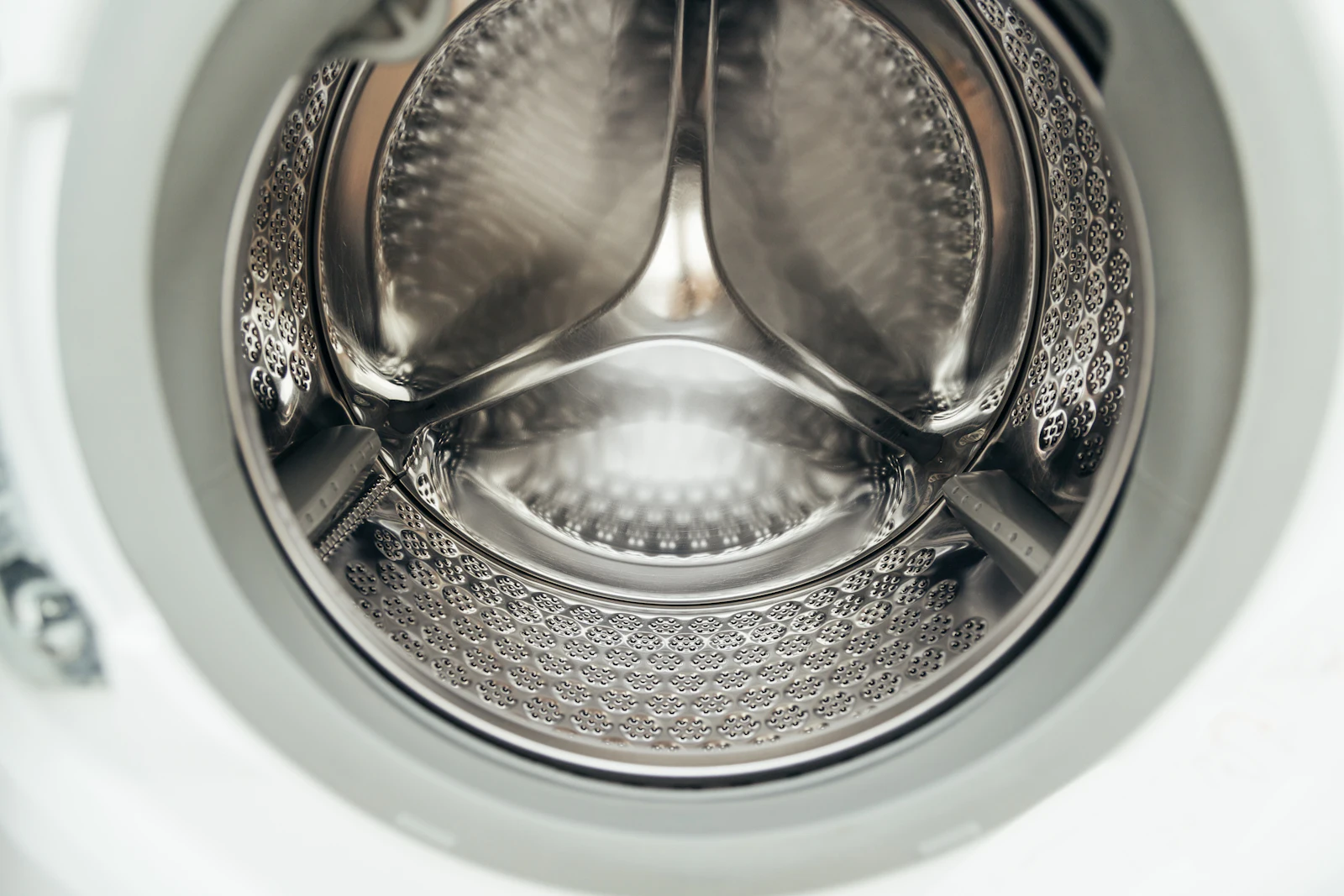
Fig. 01The door of a washer-extractor. A clamp ring presses the glass and gasket against the shell for a watertight seal.

EQ-01 / Suspended

Soft-mount washer-extractors

The wash shell and drum hang on springs and shock absorbers inside the frame. The suspension absorbs the forces of high-speed extraction, so the machine does not depend on the building to hold it still.
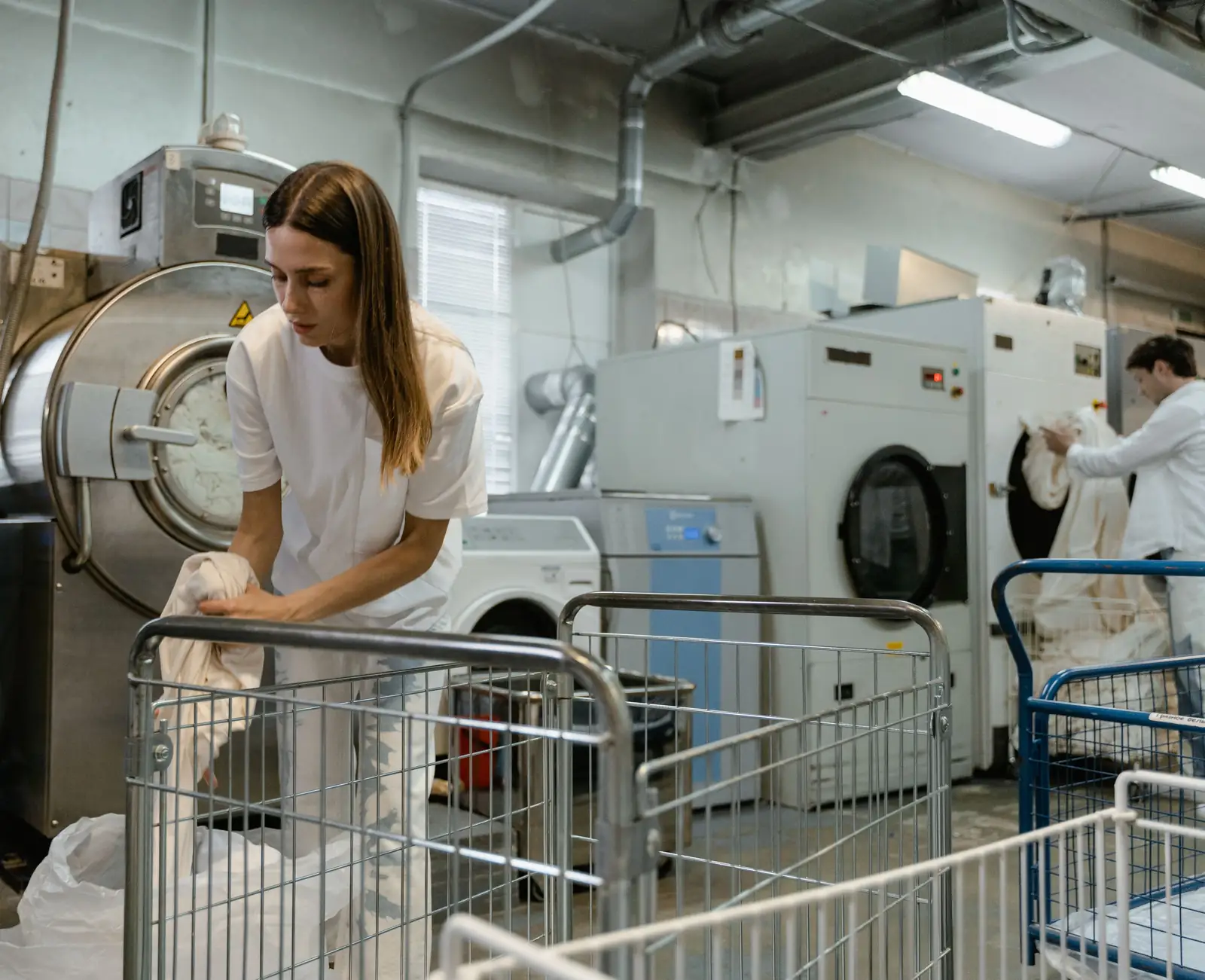
On-premises laundry with a washer-extractor, tumble dryers, and wire linen carts
Fig. 02A free-standing washer-extractor in an on-premises laundry, with carts staged in front.

AWhat it is

A front-loading washer-extractor whose shell floats on a suspension. Across the industry, soft-mount machines typically extract at about 300 to 450 G, which leaves less water in the goods than a typical hard-mount extract.

BWhere it fits

Laundries without a dedicated foundation: existing buildings, retrofits, basements and upper floors where the structure allows it, and rooms where dryer time is the bottleneck.

CInstallation notes

  • Usually no anchor bolts or special foundation.
  • The floor must be level and strong enough for the machine's static and dynamic loads. Have a building engineer confirm it.
  • Shipping restraints come out before the first run.
  • Leave the service clearance the installation manual calls for.

DConfiguration options

  • Dry-weight capacity, sized to the laundry's pounds per hour.
  • Heating: building hot water only, electric, or steam.
  • Electrical supply to match the building.
  • Programmable controls with chemical dosing signals.
EQ-02 / Anchored

Hard-mount washer-extractors

A rigid frame bolted and grouted to reinforced concrete. Without a suspension, the foundation carries the forces of extraction, which is why most hard-mount machines spin to lower G-force.

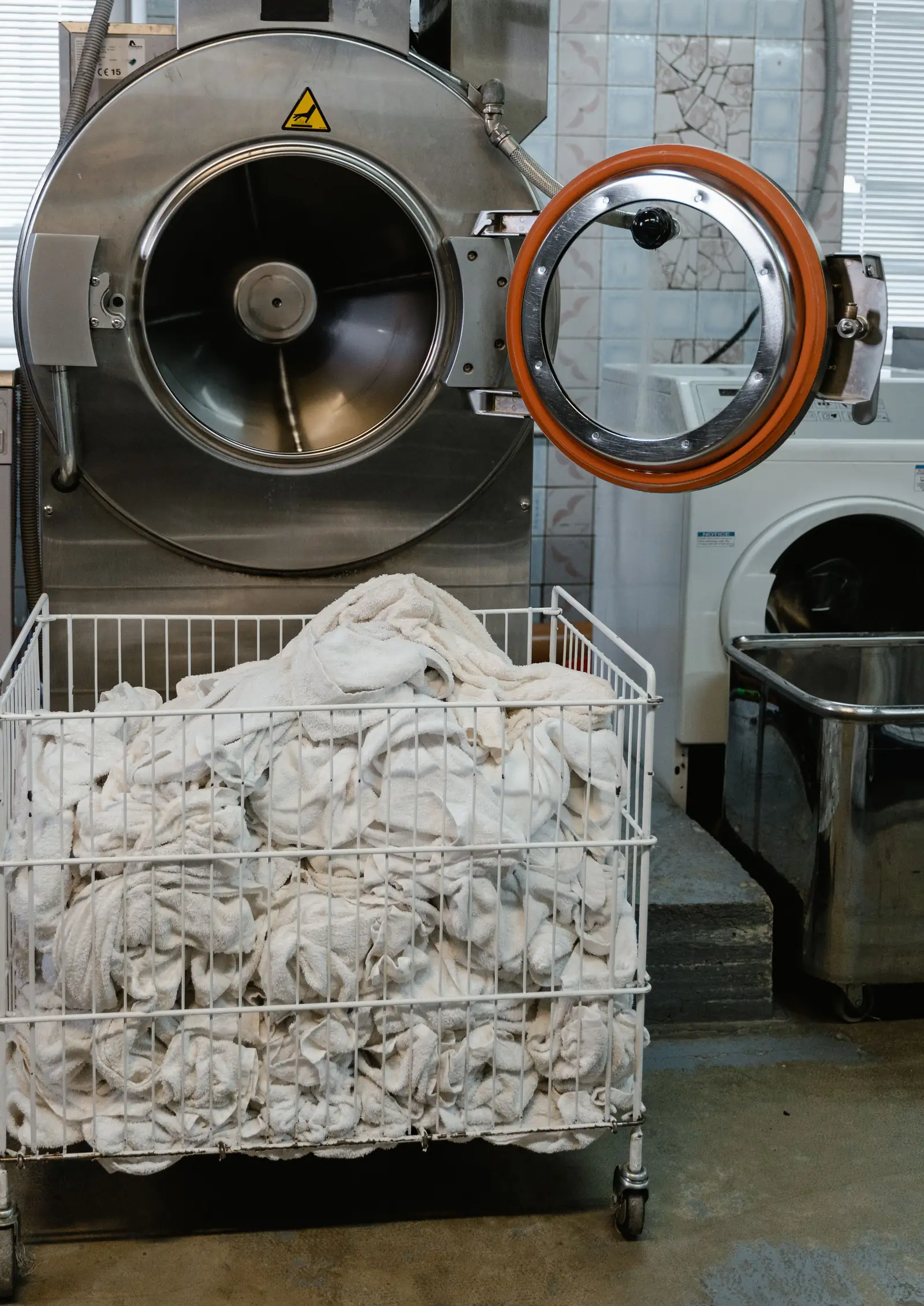
Washer-extractor with its door open beside a cart of white towels
Fig. 03Door open at the end of a cycle, with a cart of towels ready to load.

AWhat it is

A washer-extractor fixed directly to the floor. Most hard-mount machines extract at about 100 to 200 G, and some high-speed models reach 300 G or more.

BWhere it fits

Ground-level laundries on slab: industrial and uniform plants, and replacements where a suitable foundation is already in place.

CInstallation notes

  • Reinforced concrete built to the manufacturer's foundation specification.
  • Anchor bolts and grout are part of the installation.
  • Not for wood floors, tile over a weak base, elevated floors, or slabs over basements.
  • Plan the curing time of a new foundation into the schedule.

DConfiguration options

  • Dry-weight capacity and number of machines.
  • Heating: building hot water only, electric, or steam.
  • Drain arrangement to suit a trench or sump.
  • Programmable controls with chemical dosing signals.
EQ-03 / Pass-through

Barrier washers

A washer built into the wall between a soiled room and a clean room. Goods go in through a door on the soiled side and come out through a second door on the clean side.

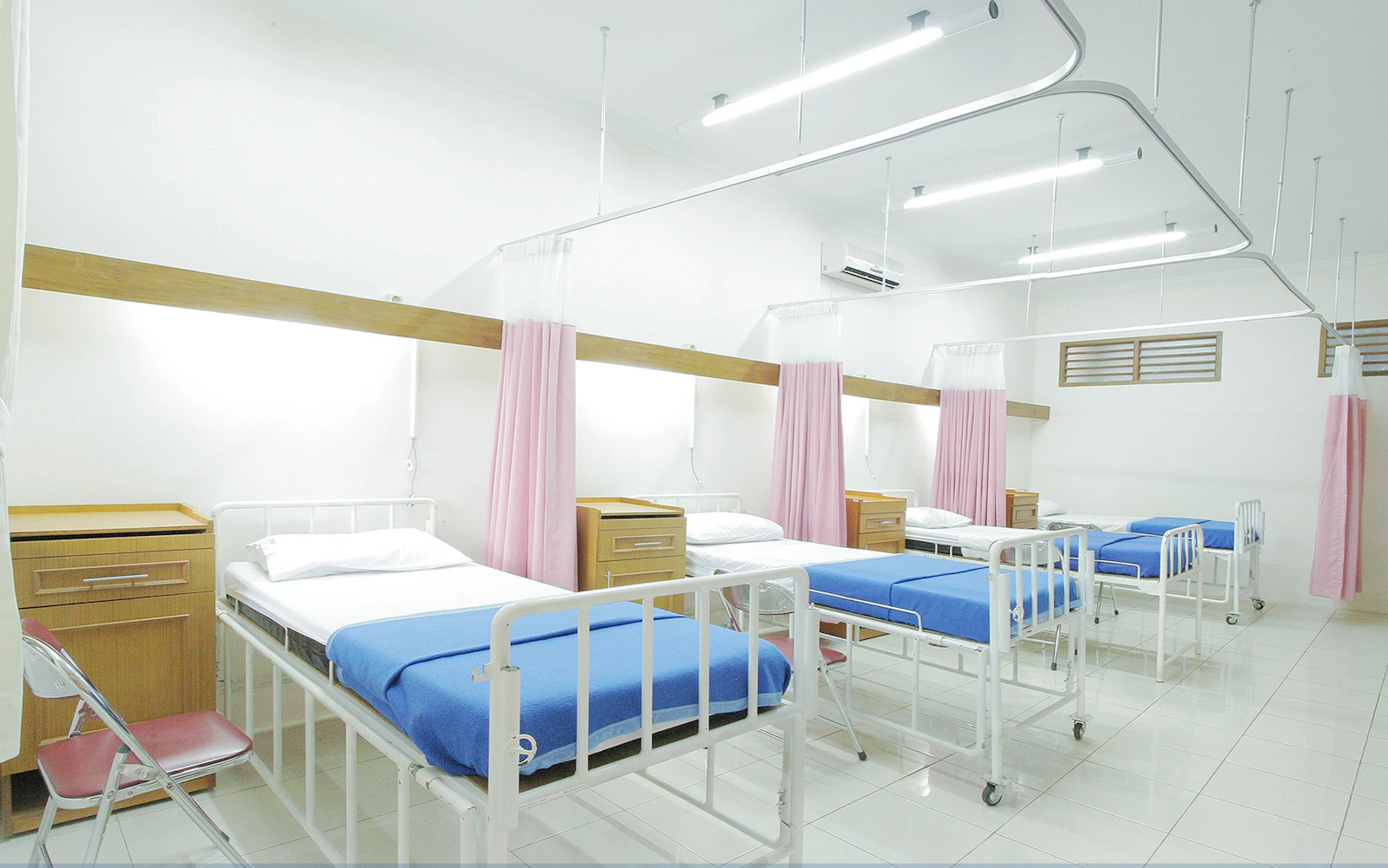
Hospital ward with made beds, blue blankets, and privacy curtains
Fig. 04Hospital linen: the main reason laundries separate soiled and clean work.

AWhat it is

A washer-extractor with a loading door and an unloading door on opposite sides of a dividing wall. Door interlocks keep both sides from being open at the same time.

BWhere it fits

Hospitals are the main users. Barrier washers also serve cleanroom, pharmaceutical, food-processing, and fire-service laundries that keep dirty and clean work apart.

CInstallation notes

  • The wall is built around the machine and sealed to it.
  • Both rooms are planned together: soiled sorting on one side, clean finishing on the other.
  • Utilities and service access are routed so technicians can reach the machine.

DConfiguration options

  • Dry-weight capacity per load.
  • Controls on the soiled side, the clean side, or both.
  • Heating method and chemical dosing signals.
  • Formulas for thermal or chemical disinfection.

EQ-04 / Integration

Controls and chemical dosing

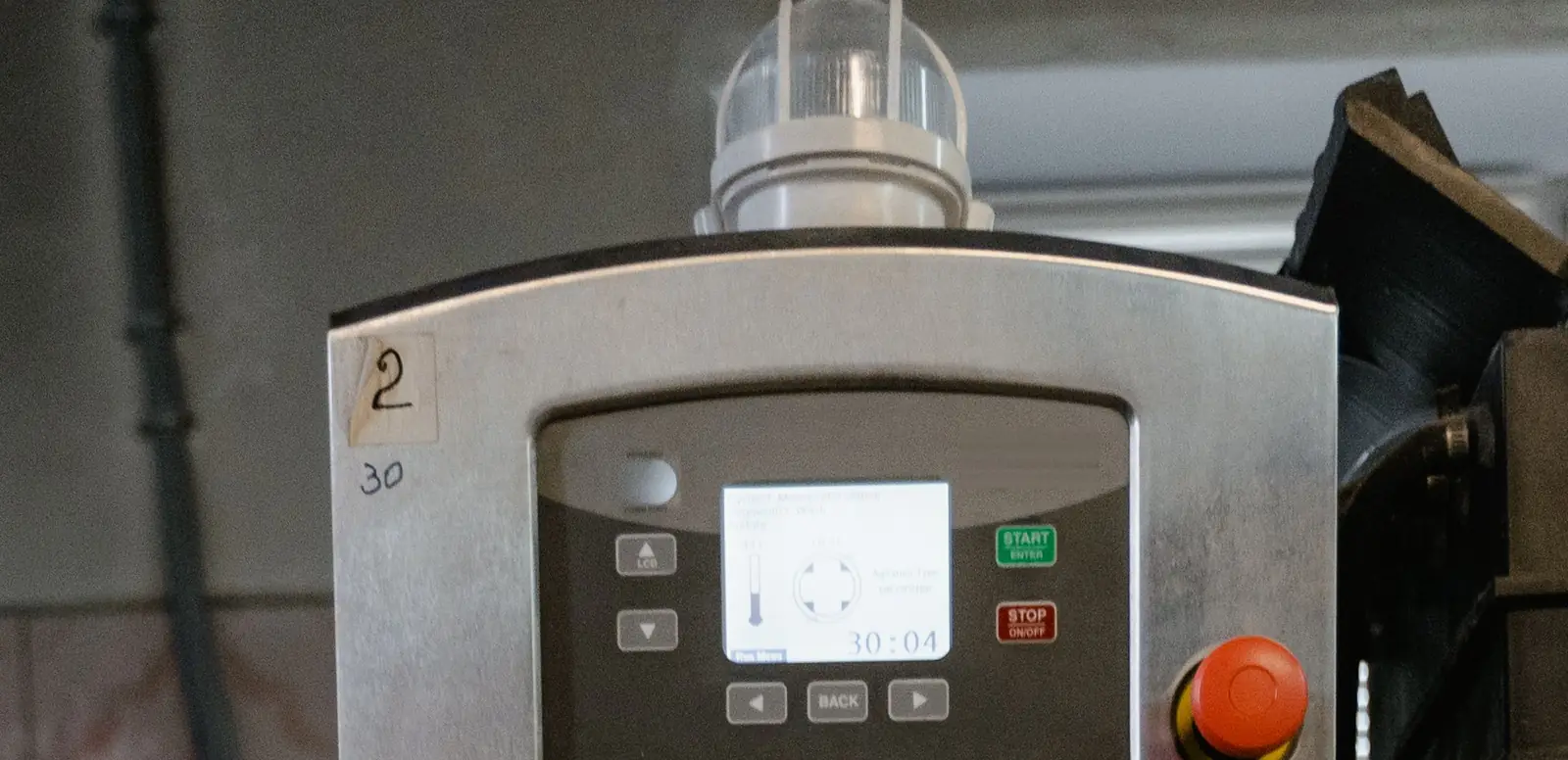
The controller turns a wash into steps. Each step sets water level, temperature, time, drum action, and speed, and can signal a dosing pump to deliver chemistry at the right moment.

Programmable washer-extractor controller with a display, start and stop keys, and an emergency stop button
Fig. 05A programmable washer-extractor controller with start, stop, and an emergency stop.

AWhat it is

A programmable controller that stores wash formulas, plus the signal connections that tell liquid chemical pumps when to dose.

BWhere it fits

Every washer-extractor. It matters most where goods vary, such as linen and terry, gear and uniforms, and where the chemical supplier needs precise injection points.

CInstallation notes

  • Dosing pumps are usually supplied and set up by the chemical provider.
  • Plan wall space for pumps and safe chemical storage near the machines.
  • Agree on formula names and steps with the chemical provider before startup.

DConfiguration options

  • A formula for each type of goods and soil.
  • Water levels, temperatures, and rinse counts per step.
  • Extraction speeds per formula, including limits for delicate goods.
  • Dosing signals assigned to the formula steps.
§ 02.5Comparison tableTable 01

Side by side.

General characteristics of each category across the industry. A specific machine's manual and specification sheet always take precedence.

G-force ranges summarize published manufacturer and distributor information for each category. They describe the market, not a FreshLine model.
CategoryFoundation requirementsExtractionFootprintBest applications
Soft-mountUsually no anchor bolts or special foundation. Needs a level floor with enough strength for the loads, confirmed by an engineer.About 300 to 450 G
Less water left in the goods, so less dryer time.
Free-standing. Machines can usually stand closer together than anchored machines; follow the manual's clearances.Hospitality, senior living, laundromats and multi-housing, athletics, upper-floor and retrofit laundries.
Hard-mountReinforced concrete to the manufacturer's specification, with anchor bolts and grout. Usually at ground level on slab.Mostly about 100 to 200 G
Some high-speed models reach 300 G or more.
Machine plus its foundation pad, with room around it for anchoring and service.Industrial and uniform plants, and existing laundries with suitable foundations.
BarrierSet into a dividing wall; floor and wall details planned with the room layout.Depends on the machine
Ask for the extraction rating of the specific model.
Spans two rooms. Needs space to load on the soiled side and unload on the clean side.Hospitals, cleanroom and pharmaceutical laundries, food processing, fire service.
Controls and dosingNone. Wall space for dosing pumps and chemical storage.Sets the extract speed
Formulas can cap G-force for delicate goods.
Mounted on the machine, with pumps nearby.All of the above.
§ 02.6Next step

Not sure which category fits?

Tell us about the floor, the room, and the goods. We will reply by email with the category we would start from and the questions to settle next.

contact@freshlinewashers.com